Showing posts with label mortgage rates. Show all posts

Tuesday, January 13, 2026

Mortgage Rates Hit Lowest Level Since 2024


Mortgage Rates Fall — What It Means for Home Sales

Mortgage rates hit lowest level in the U.S. in more than a year, providing a potential lift for homebuyers and signaling a possible thaw in the sluggish housing market. This decline in borrowing costs could help boost home sales activity in early 2026 as buyers re-enter the market.

Key Takeaways:

  • Mortgage rates have dropped to their lowest level since 2024, improving homebuyer affordability.
  • The average 30-year fixed mortgage rate decline increases purchasing power and lowers monthly payments.
  • Lower borrowing costs could stimulate homebuyer demand and contract activity.
  • The rate drop may help drive stronger U.S. home sales in early 2026, especially during the spring selling season.

30-Year Mortgage Rates Drop Significantly

According to recent data, the average rate on a 30-year fixed-rate mortgage has dipped to around 6.12%–6.15%, its lowest level in roughly 15 months. This marks a sharp change from earlier in 2025, when rates hovered near 6.89% and—at times—above 7%. The decline is noteworthy given that mortgage rates significantly impact home affordability and buyer demand.

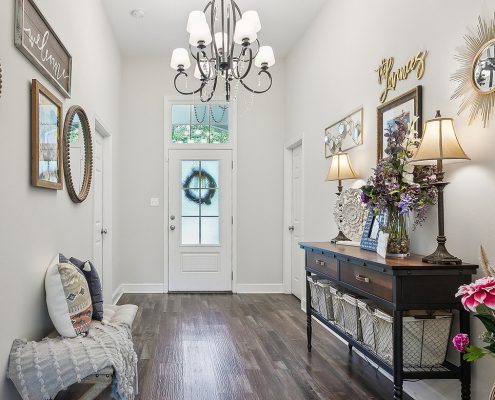
Lower mortgage rates directly affect monthly mortgage payments, giving qualified buyers more purchasing power and potentially encouraging hesitant buyers to jump into the housing market. Every percentage point drop in mortgage rates can save buyers thousands in interest over the life of a home loan, making homes more affordable without a change in prices.The 30-year mortgage rate drops to a 2024 low. See how falling rates could impact home sales, buyer demand, and the 2026 housing market outlook.
Why Mortgage Rates Are Falling

Mortgage rates often reflect broader economic conditions, including the movement of long-term U.S. Treasury yields and expectations around Federal Reserve interest rate policy. Analysts point to several factors behind the recent rate drop:

  • Treasury yields have fallen, reducing the benchmark lenders use to price mortgage loans.
  • Market expectations of future Fed rate cuts have grown, pushing down longer-term interest rates.
  • Slower job growth data and other economic indicators have heightened expectations of further monetary easing.

Impact on Home Buyers and Sellers

For homebuyers, especially first-time buyers, the drop in mortgage rates could make it easier to qualify for financing or afford a larger home. Lower rates also tend to increase buyer competition, which can stimulate more offers and faster contract signings in markets with limited inventory.

For home sellers, increased buyer activity tied to lower borrowing costs can help reduce time on market and potentially support higher sale prices, especially if inventory remains tight.

Housing Market Outlook for 2026

While lower mortgage rates are a positive sign, experts caution that other housing market headwinds—such as limited housing inventory and higher home prices—continue to challenge affordability and slow sales. Nevertheless, the recent slide in rates gives buyers and sellers reason to be cautiously optimistic as the 2026 spring selling season approaches.


 

Click Here For the Source of the Information.

Monday, May 15, 2023

April Sees Drops in Mortgage Rates

 Freddie Mac released data showing that mortgage rates dropped for the fifth week in a row mid April. Homebuyers are out there taking advantage of the rates that are close to 6% and the slowdown in inflation. As of April 13, 2023 the 30-year fixed-rate mortgage was around 6.27% which is down from the week before at 6.28%. This is still not as good as the rates in April 2022 which were on average 5%.

“Incoming data suggest inflation remains well above the desired level but showing signs of deceleration. These trends, coupled with tight labor markets, are creating increased optimism among prospective homebuyers as the housing market hits its peak in the spring and summer,” says Freddie Mac’s chief economist, Sam Khater.

The economy is also seeing an ease off of inflation which also helps with mortgage rates. According to the March Consumer Price Index there is still wiggle room for what professionals concluded.

“On the one hand, the fact that inflation is still running at more than twice the target level, and core inflation – which includes goods and services, excluding volatile food and energy – saw an uptick to 5.6% in March, highlights that the Fed still has more to do and may need to lift short-term rates again at its early May meeting. On the other hand, overall inflation slowed more notably, and even core inflation on a month-to-month basis eased somewhat, a sign that the Fed’s tightening is having the desired effect. Even if the Fed needs to raise short-term rates a bit higher, we are very likely nearing the end of the tightening cycle,” explained Danielle Hale, from Realtor.com.

Those that were on the brink of buying are now jumping at the opportunity. There has been an influx in applications to purchase a home according to Bob Broeksmit, MBA President and CEO. As long as the mortgage rates hold or dip lower, the buyers will come.

“Despite the huge shifts in market momentum, home sellers can count on the usual seasonal trends tipping the scales a bit further in their favor while home shoppers should expect a fair amount of competition that should ease as we move later into the year,” Hale says.

Click Here for the Source of the Information.

Saturday, October 29, 2022

The Current New Orleans Housing Market

 Many buyers have become very frustrated with the housing market within the past two years.  Buyers are in crazy bidding wars making it hard to find a home. One home buyer, who has a price range of $400,000 to $450,000, is surprisingly being outbid the last several attempts and purchasing a home. 

“There is not a lot of property on the market that is viable and when they do come up, they sell within a matter of days.  I even offered all cash, full asking price recently and it got bought out from under me,”  says a current renter.
New Orleans and the surrounding neighborhoods have seen their share of quick home sales and high bids on properties.  This scenario has been the same whether a homebuyer is purchasing a starter home or a luxury home.  Professionals in the industry say there are many determining factors that say a change is ahead.  In 2021 a 30-year mortgage was at 3% while current rates are averaging around 6.3%.  The higher monthly payment cost coupled with the rising inflation is making buying power weaker.  The U.S. inflation has climbed above 8% which was around 5% this time last year.
All of these occurrences have caused a slump in the number of home sales.  In fact, the New Orleans metro area which includes nine parishes, is seeing a 10% decrease in the number of home sales compared to the home sales of the same time last year.  This is also confirmed by the number of homes on the market.  The market is up 14% compared to last year but the sales are down from last year.  Currently, we are also increasing the months’ supply of inventory from 2 months to 3 months.
Even though the market is becoming less and less of a seller’s market, it is still not seeing the sales.  The most demand seen is in Mid-City, Uptown, parts of the Bywater and Old Metairie.  “It’s probably the strangest housing market I’ve seen in 20 years. Some houses now are sitting for 30 to 60 days, and offers fly off the market overnight with multiple offers. It’s house by house, block by block, and it doesn’t make a lot of sense,” said Craig Mirambell, a Metairie area broker.
“Anything that is well priced, realistically priced, goes fast.  Some of the frenzy has died down.  But anything well priced will sell,” says Bron Hebert, a realtor with Francher Perrin Group.

Friday, August 5, 2022

A Record Decline in Mortgage Rates

 Why did the mortgage rate have the biggest decline this month since 2008?

According to Sam Khater of Freddie Mac, "over the last two weeks, the 30-year fixed-rate mortgage dropped by half a percent, as concerns about a potential recession continue to rise."

"Over the last two weeks, the 30-year fixed-rate mortgage dropped by half a percent, as concerns about a potential recession continue to rise," reported Sam Khater, Freddie Mac's chief economist. The higher rates are also affecting the number of mortgage applications. According to the Mortgage Bankers Association, applications dropped 5.4% in one week.

According to CNN, this is the largest decline we have seen since December of 2008. The week ending on July 7th the 30-year fixed mortgage rate averaged 5.30% which was down from the previous week which was at 5.70%. Although this is the largest decline we have seen, the rate was still a good bit higher than it was in July 2021.


"Rates are still significantly higher than they were a year ago, which is why applications for home purchases and refinances remain depressed," said Joel Kan, MBA's associate vice president of economic and industry forecasting. "Purchase activity is hamstrung by ongoing affordability challenges and low inventory, and homeowners still have reduced incentive to apply for a refinance."

The sharp decline stems from economic concerns about the high increases that came in May and June. Mortgage rates are at the highest levels along with listing prices. Listing prices have risen over 8.5% year-over-year for the last two years. The good news for buyers, more homes are being listed now according to Joel Berner, Realtor.com's senior economic research analyst.

Although there is more inventory, buyers are stills struggling with the inflation in home prices. This time last year, a buyer could purchase a home priced at $390,000 and put 20% down and still have a monthly payment of only $1,299. Freddie Mac reports that a buyer in today's market can purchase the same priced home with 20% down and the payment has jumped to $1,733 at the current rate of 5.30%.

"This inversion might sound ominous, especially in the midst of sustained inflation that both markets and the Fed agree will likely require more fed funds rate hikes to tame, but it remains to be seen whether these market conditions will lead to increases in the unemployment rate or decreases in production that characterize a recession," Joel Berner, Realtor.com's senior economic research analyst said.

Click Here For the Source of the Information.

Top Tips for Home Buyers in 2026

  What to Do and What to Avoid as a Home Buyer As the real estate market continues to evolve, tips for home buyers are important, as 2026 ...