Saturday, August 23, 2025

Summer 2025 Home Design Trends Blend Calm Retreats with Bold Expressions

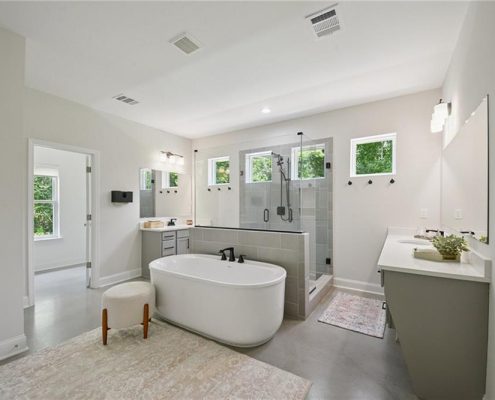
Home design in 2025 is pulling in two very different directions: on one end, serene, Zen-inspired spaces with muted palettes, and on the other, bold interiors filled with rich, moody tones. According to a new trend report from Houzz, homeowners are embracing both extremes — and everything in between — as they remodel and refresh their spaces this summer.

Organic Modern Takes the Spotlight

One of the fastest-rising styles is organic modern, which blends clean, minimalist lines with natural textures and forms. Think crisp white walls paired with warm woods, stone accents, or woven details. Houzz reports searches for "organic modern bedrooms" have more than tripled year over year, with kitchens, dining rooms, and bathrooms also seeing surges in popularity.

Dark and Moody Interiors Make a Comeback

At the same time, homeowners are leaning into dark and dramatic palettes. Searches for "moody living rooms" and "moody kitchens" have doubled, while "dark ceiling" styles are up 60 percent compared to last year. Designers are layering deep reds, browns, and charcoal tones to create cozy, intimate, or dramatic effects — a sharp turn away from the all-white interiors that dominated much of the past decade.

Reading Rooms and Dark Academia

The "dark academia" aesthetic, rooted in literature and learning, is now shaping interior spaces. Searches for "book nooks," "library walls," and the British-inspired "snug" have all spiked as homeowners carve out quiet areas for reading and reflection. Houzz says searches for dark academia home styles tripled in early 2025, reflecting a growing demand for scholarly, cozy retreats within the home.

Japandi and the Zen Influence

Another major trend is Japandi, a blend of Japanese minimalism and Scandinavian practicality. Known for simplicity, natural elements, and harmony, Japandi-inspired spaces are gaining traction in kitchens, bedrooms, and bathrooms. Related design concepts like wabi-sabi (finding beauty in imperfection) and Zen gardens are also seeing a rise in interest, highlighting the ongoing shift toward balance and tranquility in the home.

Wellness at Home

Wellness-focused design remains front and center. Searches for cold plunges, indoor saunas, home spas, backyard saunas, and skylights are climbing, reflecting homeowners' desire to make their houses feel more restorative. Bringing in more natural light and creating spa-like experiences at home are top priorities in many remodels.

Leisure and Entertainment Spaces

Dedicated hobby and leisure areas are trending as well. Houzz reports searches for listening rooms have more than doubled, and "living room pianos" are surging as families carve out spaces for music. Recreational features like bocce courts, bowling alleys, and game rooms are also on the rise, showing that homeowners want fun built into their homes — both indoors and out.

Kid-Centered Zones

Families are also designing with children in mind. Searches are up for race car beds, Jack-and-Jill bathrooms, teen lounges, and kids' gaming bedrooms, reflecting a growing interest in creating playful, functional zones tailored to young family members.

A Home for Every Lifestyle

Taken together, these emerging design trends paint a picture of homeowners seeking balance — between calm and energy, minimalism and boldness, function and fun. Whether it's through a spa-like bathroom, a moody reading nook, or a backyard bocce court, today's home design is less about following one rulebook and more about reflecting personal lifestyle and priorities.

Click Here For the Source of the Information.

Stability in an Unpredictable Market

For most homebuyers, a fixed-rate mortgage remains the most popular financing choice — and for good reason. With this type of loan, your interest rate is locked in for the entire term, which means your monthly principal and interest payments never change. While property taxes and insurance can cause your total monthly payment to fluctuate, the loan itself offers long-term stability that's especially valuable when rates are volatile.

How Fixed-Rate Mortgages Work

When you take out a fixed-rate mortgage, your lender guarantees a steady interest rate from day one until the loan is paid off. Even though published rates change daily — sometimes by the hour — once you close, your rate won't budge.

Payments follow an amortization schedule. In the early years, most of your monthly payment covers interest, with only a small portion reducing your loan balance. As time goes on, the balance shifts, and more of each payment chips away at your principal.

Example: A $300,000, 30-year fixed loan at 6.8% comes with a monthly payment of about $1,956 (excluding taxes and insurance). Early on, only around $255 goes toward the loan balance, while nearly all the rest pays interest. Fast forward 20 years, and roughly half of that monthly payment reduces principal.

Current Fixed-Rate Mortgage Rates

During the pandemic, rates hit historic lows, bottoming out at 2.65% in January 2021. But after the Federal Reserve began raising rates in 2022, mortgage costs climbed quickly. By late 2023, the average 30-year fixed mortgage had spiked to 7.79%. Since then, rates have settled but remain elevated, hovering above 6% throughout 2024 and into 2025.

Shorter loan terms typically offer lower rates — for example, 15-year fixed mortgages — though the monthly payments are higher.

Who Qualifies for a Fixed-Rate Mortgage?

Requirements vary by loan type:

Conventional loans: Usually require a minimum 620 credit score, a down payment of at least 3%, and a debt-to-income ratio of 43% or less.

Government-backed loans: FHA, VA, and USDA programs allow more flexibility, offering lower credit score minimums or reduced down payment options.

Conforming vs. non-conforming loans: Conforming loans meet Federal Housing Finance Agency (FHFA) standards, including loan limits, while jumbo loans and other non-conforming products require stricter qualifications.

Amortizing vs. non-amortizing loans: Most fixed mortgages are amortizing, paying down principal and interest together. A small segment of non-amortizing, interest-only products exist but often involve balloon payments later.

30-Year vs. 15-Year Fixed Mortgages

The 30-year fixed mortgage remains the gold standard for affordability, offering lower monthly payments, though with higher total interest over the life of the loan.

The 15-year fixed mortgage comes with higher monthly costs but a lower interest rate and significantly less paid in total interest. For buyers with strong incomes, this option builds equity faster and can save tens of thousands over time.

Many lenders now offer flexible terms — from 8 years up to 40 years — giving borrowers more control over their repayment strategy.

Fixed-Rate vs. Adjustable-Rate Mortgages

While fixed loans dominate the U.S. market, adjustable-rate mortgages (ARMs) are another option. ARMs start with a lower introductory rate, making them appealing for buyers who plan to move or refinance within a few years. However, once adjustments kick in, rates (and payments) can rise sharply, making long-term budgeting riskier.

Pros and Cons of Fixed-Rate Mortgages

Pros

  • Predictable monthly payments that simplify budgeting
  • Protection from rising interest rates

Cons

  • Higher initial rates compared to ARMs
  • No automatic savings if rates fall (you'd need to refinance)

What Homebuyers Should Keep in Mind

Even with today's higher interest rate environment, fixed-rate mortgages remain the most reliable choice for buyers planning to stay put long term. The certainty of a locked-in payment outweighs the gamble of waiting for lower rates that may never arrive.

For short-term homeowners or those expecting to relocate soon, an ARM might be worth considering. But for most buyers, the stability of a fixed-rate mortgage continues to be the safest path to sustainable homeownership.

Click Here For the Source of the Information.

Friday, July 25, 2025

Boost Your Credit, Buy with Confidence: A Step-by-Step Guide to Mortgage Readiness

Improving your credit is one of the most important steps you can take before applying for a mortgage. A great place to begin is by reviewing your credit reports from all three major bureaus—Equifax, Experian, and TransUnion. You can access these for free through AnnualCreditReport.com. Carefully check for any mistakes, such as incorrect late payments or closed accounts that should be open. If you spot an error, file a dispute with the reporting bureau right away to correct it.

Keeping your accounts in good standing by paying bills on time is essential. Missed or late payments can drag down your credit score and remain on your report for up to seven years. If you're currently within a grace period on a payment, take immediate steps to make it current. Even if you've made past mistakes, consistent on-time payments moving forward will improve your credit over time.

Another factor to watch is your credit utilization ratio—how much of your available credit you're using. This accounts for 30 percent of your credit score. Ideally, you should keep utilization below 30 percent. If your balances are high, focus on paying them down. Alternatively, if you're a responsible spender and usually pay off your balance, you can ask your credit card providers to raise your credit limits, which will lower your utilization ratio without requiring you to reduce spending.

Avoid opening new credit accounts before applying for a mortgage. Each application triggers a credit inquiry, which can temporarily reduce your score. Likewise, don't close any existing credit accounts, as this can increase your utilization ratio and negatively affect your score. Stability is key during the mortgage process.

For younger or first-time buyers with limited credit history, becoming an authorized user on a parent's or trusted relative's credit card can be a helpful strategy. As long as the primary cardholder pays on time and maintains a low balance, this history will reflect positively on your own credit profile.

If you're overwhelmed by debt or unsure where to begin, consider speaking with a certified credit counselor. A professional from a nonprofit credit counseling agency can help you develop a budget, negotiate lower interest rates, and create a realistic plan to reduce your debt over time.

Understanding how your credit score is calculated can also help guide your improvement strategy. According to Equifax, your FICO score is composed of several elements: 35 percent is based on your payment history, 30 percent on your total debt, 15 percent on the length of your credit history, and 10 percent each on new accounts and credit mix. Scores in the high 600s and 700s are typically considered good, with the national average reaching 715 in 2024. Debt that builds long-term value, like a mortgage, is viewed more favorably than revolving credit card debt.

Having a higher credit score not only increases your chances of mortgage approval, but it can also save you thousands of dollars. A lower interest rate translates to lower monthly payments and less paid in interest over the life of the loan. For example, on a $300,000 home with a 3 percent down payment, a rate difference of just 0.125 percent can mean a monthly savings of over $20—and a long-term savings of more than $8,000 over a 30-year loan.

Once your credit is in order, the next steps involve preparing for the mortgage process. First, gather financial documents including pay stubs, tax returns, and statements from bank and investment accounts. Then, shop around for mortgage preapprovals from at least three lenders to compare rates and terms. After finding a home and having your offer accepted, you'll officially apply for a mortgage and begin the underwriting process, during which the lender verifies your financial details. If everything checks out, you'll proceed to closing, where you'll sign final documents and officially become a homeowner.

Taking the time to boost your credit and get financially organized will not only increase your chances of buying the home you want—it will also ensure you do so on solid, long-term financial footing.

Click Here For the Source of the Information.

Historic Carver Theater Heads to Auction, Carrying Legacy and Opportunity

Once a beacon of cultural pride and entertainment in New Orleans' Treme neighborhood, the Carver Theater is now up for auction—opening a new chapter in its storied legacy. Scheduled for online bidding from July 17 to 23, the landmark property and 15 adjoining parcels on Orleans Avenue and St. Ann Street will hit the auction block with a starting bid of $2 million.

Built in 1950 and named after Black scientist and educator George Washington Carver, the Carver Theater quickly became a vital gathering space for African American moviegoers during the era of segregation. Unlike the downtown cinemas that enforced harsh racial boundaries, the Carver was regarded as a first-class venue. Theater owner Rene Brunet once called it "the best 'colored' theater in New Orleans and perhaps the entire South."

The 1,050-seat cinema closed in 1980 and was later repurposed into the Carver Medical Clinic. But after sustaining five feet of floodwater during Hurricane Katrina in 2005, the building stood dormant until local optometrist Dr. Eugene Oppman spearheaded an $8 million renovation. Funded in part by federal and state tax credits, the restoration transformed the space into an 800-capacity multipurpose venue, while reviving its iconic red signage. The effort earned a Louisiana Landmark Society Award for Excellence in Historic Preservation in 2015.

Over the past decade, the Carver has hosted a vibrant mix of events—from concerts and theatrical productions to political addresses and funerals. Notably, former Mayor Mitch Landrieu delivered his 2015 State of the City address there, and Snoop Dogg performed during Jazz Fest the following year. Despite its cultural revival, the Carver's financial footing remained shaky. A commercial development plan failed to materialize, leading Oppman to list the theater and adjacent properties for $5.5 million in 2016. Though he later paused the sale in favor of a new music series, debt continued to accumulate.

By 2020, foreclosure litigation was initiated by Hollywood producer Bob Yari, who had acquired the loans from a Malaysian tycoon after the issuing bank failed. In 2023, a judge awarded Yari a $2.3 million judgment, though enforcement was paused as Oppman appealed. That appeal is set for oral argument this September.

Now, SVN Gilmore Auction & Realty is overseeing the auction. According to managing director David Gilmore, the litigation will not affect the property's title. The Carver Theater, designated within an Enterprise Zone and Opportunity Zone, also qualifies for state and federal historic tax credits, making it especially attractive to investors seeking both legacy and opportunity.

While the reserve price exceeds the $2 million opening bid, Gilmore confirmed that offers for the theater alone will be considered ahead of the auction. "We don't anticipate that, but we can negotiate," he said. Additional surrounding lots could serve well as parking or future development, adding further appeal.

Even with ownership uncertain, the Carver continues to host events, with bookings already secured through Mardi Gras 2026. Gilmore believes interest will continue to grow as marketing picks up in the coming weeks. "We've shown it several times and gotten several prospects," he noted.

The Carver's past is filled with stories of resilience and community spirit—from Chef Leah Chase's recollection of using Pepsi caps to help kids earn free Saturday movie tickets, to its role as a cultural anchor in the heart of Treme. As it prepares for its next chapter, the Carver Theater remains a symbol of both historic struggle and enduring hope—ready to be reimagined by whoever takes the baton next.

Click Here For the Source of the Information.

The Modern Kitchen: Where Personality, Sustainability, and Comfort Meet

Kitchens have always been central to the home—but today's kitchen is more than just a space to cook. It's a personal sanctuary, a design statement, and a hub of daily life. While trends come and go, modern homeowners are seeking lasting, functional upgrades that balance beauty, efficiency, and sustainability. Whether you're planning a full renovation or simply want to make a few impactful changes, these kitchen design trends offer something fresh for every style.

Beyond the Basics: New Countertop Choices Granite and quartz have long dominated kitchen counters, but both are seeing a decline. Concerns over silica dust and a growing desire for uniqueness have led to new favorites like natural quartzite and sintered stone surfaces such as Dekton and Neolith. These materials are more sustainable, come in a range of textures and hues, and offer durability without sacrificing elegance. On the higher end, marble remains beloved, especially among those who embrace the patina that comes with use. Designers are also loving the "counter splash"—using the same material on the countertop and backsplash for a seamless, modern finish.

Storage Solutions with Style As open-concept kitchens reduce the number of walls available for cabinetry, homeowners are getting creative. Solutions like stacked cabinets above built-ins or moving pantry space to a secondary kitchen area are becoming more common. And while function is key, so is the aesthetic. Rich wood tones such as walnut, oak, and cherry are making a comeback, along with darker painted finishes—sometimes even black. These moody palettes shine in kitchens with ample natural light and pair well with warm metallic hardware.

More Personality, Please Forget cookie-cutter kitchens. Homeowners now want spaces that reflect their personalities and lifestyles. This includes mixing cabinet finishes, incorporating texture and contrast, and adding stylish lighting that makes a statement. Classic colors like white still dominate, but greens, blues, and natural wood tones are gaining ground. The return of deep, 1930s-inspired green is especially notable, bringing depth and vintage charm to modern layouts.

Comfort Matters While aesthetics draw us in, comfort keeps us there. Open-concept kitchens that flow into living areas are still going strong, creating spaces that are as social as they are functional. To soften the look of hard surfaces like stone counters and tile, designers are turning to materials such as hand-scraped wood floors, rounded countertop edges, and layered lighting to add warmth and dimension.

Sustainable Choices in Materials and Tech Sustainability is no longer a niche concern—it's a key part of smart design. Reclaimed woods, bamboo, glass, and locally sourced materials are becoming more common, reducing environmental impact while adding character. Meanwhile, smart appliances like the HydroTap offer instant access to boiling, chilled, or sparkling water, all while using less energy. Wi-Fi enabled ovens and refrigerators make life easier and more efficient, especially for tech-savvy households.

Designing with the Future in Mind Aging in place is top of mind for many, and the kitchen is evolving to meet those needs. Safety-forward features include pull-out cabinets, wide drawer handles, nonslip flooring, and varied counter heights for improved accessibility. Appliance controls are being relocated to the front, and ramps are replacing steps for easier navigation. These upgrades ensure that kitchens can remain functional and beautiful throughout every stage of life.

Simple Changes, Big Impact Not every kitchen update requires a full renovation. Some of the most popular trends are surprisingly low-key. More homeowners are replacing all their appliances during updates, opting for smart, energy-efficient models. Islands are getting longer—over seven feet in many cases—making them a natural replacement for dining tables and ideal for casual gatherings. Rounded corners on islands and countertops add a contemporary softness, while tall backsplashes that extend to the ceiling turn functional surfaces into artistic statements. Materials like porcelain tile, engineered quartz, and natural stone are still favorites, but bolder options like copper mirror tiles or geometric patterns are carving out space for personality.

In today's homes, the kitchen is a canvas. It's where design meets daily life, where form meets function, and where sustainability meets style. These emerging trends offer fresh ideas and practical solutions for every homeowner—whether you're renovating for resale or simply redefining how you live.

Click Here For the Source of the Information.

Top Tips for Home Buyers in 2026

  What to Do and What to Avoid as a Home Buyer As the real estate market continues to evolve, tips for home buyers are important, as 2026 ...